The big reason that no-knead bread appealed to me is that I find the traditional way of kneading, pressing the dough and folding it, to be really tiring. Fortunately, by the time I decided that I needed to knead my breads after all, I had discovered other ways to knead the dough.
I was fascinated by “French fold” (as they call it on The Fresh Loaf), as demonstrated here by Richard Bertinet. He picks up a shaggy mass of dough, slaps it down, and turns it into silky, springy dough. It looks like magic, and like magic, it’s hard to see what’s he’s doing. So I checked out Dough and Crust and watch both included DVDs. While Dough rings variations on five basic recipes, Crust mainly focuses on the all-important sourdough, as well as sweet breads. I also prefer Crust because it measures the ingredients in metric weights.
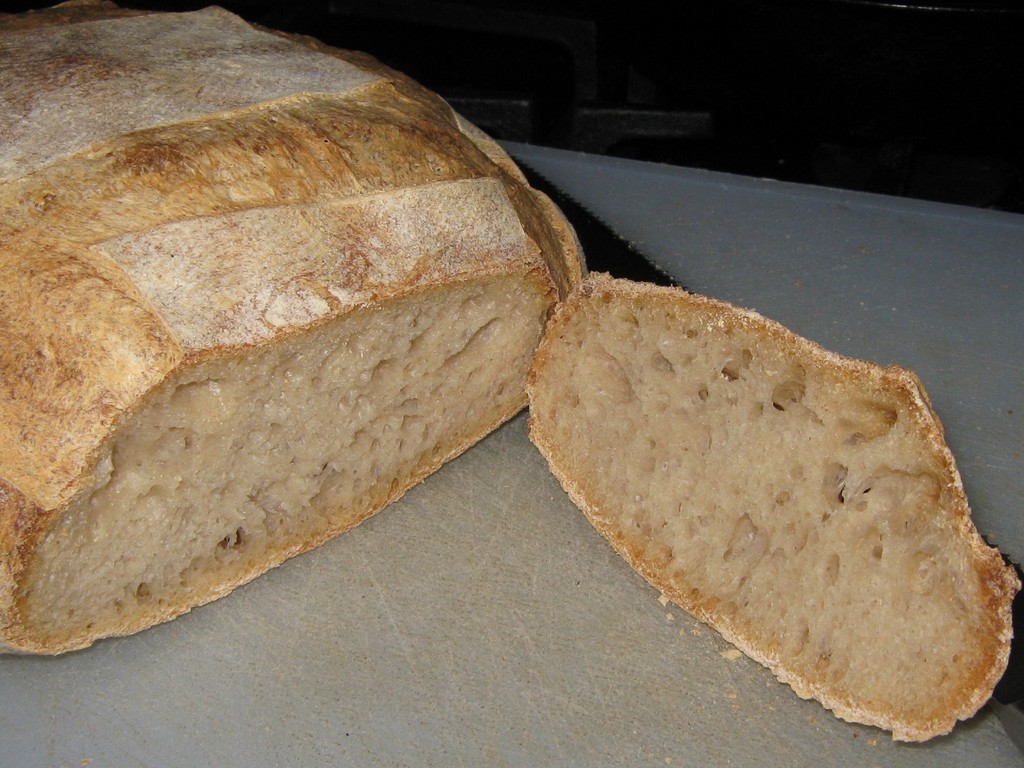
Anyway, here is my first attempt to bake the sourdough recipe from Crust. I misunderstood the proportions and the dough was so wet, it was practically paste. I knew I was in trouble, but I reminded myself of the things I’m learning about bread. As the dough spattered on the board, I told myself, Don’t add any flour. As it came up goopy over and over again, I told myself, you have to believe it will work. As I beat the crap out of that dough, and let it rest, and beat it up some more, I told myself, it’s very hard to overwork a dough by hand.
Somewhere along the way, I started to think I knew what I was doing, because the dough did become elastic. It never grew silky, but it did get springy. It held its shape. It even sprang up in the oven. It worked!

 Writing Every Day